Figuring out who pays after an Uber or Lyft accident in San Luis Obispo is not like filing a regular car insurance claim. The coverage depends on what the rideshare driver was doing at the exact moment of the crash, and the answer changes depending on whether the app was off, on but waiting, or actively carrying a passenger.
Three different insurance scenarios, three different coverage limits, and at least two insurers ready to argue it is the other one's problem.
A San Luis Obispo Uber and Lyft accident lawyer at Harris Personal Injury Lawyers sorts through this coverage maze so injured passengers, drivers, pedestrians, and cyclists may pursue the compensation they are owed without getting buried in finger-pointing between insurance companies. Call (805) 544-0100 for a free case evaluation, available 24/7.
What a San Luis Obispo Uber and Lyft Accident Lawyer Does for Your Claim
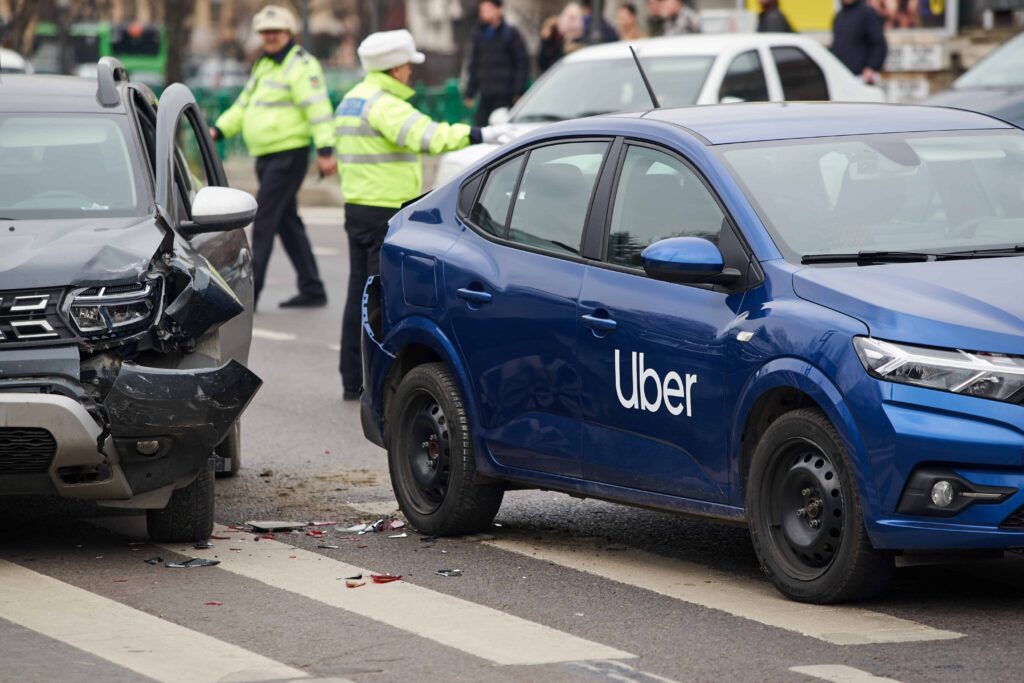
Rideshare accident claims involve layers of insurance complexity that standard car accident cases do not. Our attorneys handle the parts of the process that trip up unrepresented claimants.
Identify the Applicable Coverage Period and Policy
The single most important step in any rideshare accident claim is determining the driver's app status at the time of the crash. Our attorneys obtain ride data, GPS logs, and app activity records from Uber or Lyft to establish which insurance period applies. This determination controls how much coverage is available and which insurer is responsible.
Pursue Claims Against Multiple Insurers When Necessary
Many rideshare accidents involve overlapping insurance policies. The at-fault driver's personal insurer, the TNC's (transportation network company) commercial policy, and the injured person's own UM/UIM coverage may all be in play. Our attorneys identify every available source of recovery and pursue claims against each applicable policy to avoid leaving compensation on the table.
Handle the Insurer Disputes That Rideshare Cases Generate
Insurance companies involved in Uber and Lyft claims routinely dispute which policy applies, argue about the driver's app status, and attempt to shift responsibility to the other insurer. Our team manages these disputes directly, so clients do not have to navigate the finger-pointing between carriers while recovering from injuries.
Fee Structure
Our firm works on a contingency fee basis. Clients pay nothing up front and owe no legal fees unless we recover compensation on their behalf. We advance all costs associated with building the case, including obtaining app data, medical records, and any professional consultations needed to support the claim.
Results and Client Experience
Harris Personal Injury Lawyers has recovered more than $1 billion for injured clients across California and has handled rideshare accident claims as a significant portion of the firm's practice.
With 18 California locations, a 99%+ success rate, and more than 1,000 five-star reviews, our firm brings the resources and track record that rideshare accident claims demand.
Past results do not guarantee future outcomes.
Free Case Evaluation, 24/7
Call our San Luis Obispo office at (805) 544-0100 to discuss your Uber or Lyft accident claim. Consultations are free, available any time, and carry no obligation.
The Insurance Coverage Problem in Every Rideshare Accident

The reason Uber and Lyft accident claims get complicated fast has nothing to do with who caused the crash. It has everything to do with which insurance policy applies, because the answer changes based on the driver's status at the moment of impact.
California law requires transportation network companies (TNCs) like Uber and Lyft to carry insurance for their drivers, but the coverage kicks in at different levels depending on the driver's activity. The California Public Utilities Commission defines three coverage periods that determine which policy responds to an accident claim:
| Driver Status | What It Means | Who Pays | Liability Coverage | UM/UIM Coverage |
| App off | Driver is not logged into the Uber or Lyft app | Driver's personal auto insurance | California state minimums ($30,000/$60,000/$15,000 as of January 2025) | Per driver's personal policy |
| Period 1: App on, waiting for a request | Driver is logged in but has not accepted a ride | TNC policy (primary if personal policy excludes rideshare) | $50,000 per person / $100,000 per accident / $30,000 property damage, plus $200,000 excess | Limited |
| Period 2: En route to pickup | Driver has accepted a ride request and is driving to the passenger | Uber or Lyft commercial policy | $1,000,000 per accident | Not applicable to passenger UM/UIM; coverage depends on the claim and applicable policies |
| Period 3: Passenger in the vehicle | Passenger is in the car until they exit | Uber or Lyft commercial policy | $1,000,000 per accident | $60,000 per person / $300,000 per incident |
The coverage gap between Period 1 and Periods 2/3 is enormous. A pedestrian struck by an Uber driver who is waiting for a ride request faces a maximum liability claim of $100,000 per accident. That same pedestrian struck 30 seconds later, after the driver accepts a request, has access to $1 million in coverage.
Who Can File an Uber or Lyft Accident Claim in San Luis Obispo?
Rideshare accidents affect more people than just the passenger in the back seat. Several categories of injured people may have a claim after an Uber or Lyft crash.
Rideshare Passengers
A passenger injured during an Uber or Lyft ride is in one of the strongest positions to recover compensation. During Periods 2 and 3, significant TNC coverage may be available, but which policy applies depends on who caused the crash and what coverage is triggered.
If the rideshare driver was at fault, the claim goes against the TNC's policy. If another driver caused the collision, the claim may go against that driver's insurance, and the TNC's uninsured or underinsured motorist coverage may also apply in some situations.
Other Drivers and Their Passengers
If an Uber or Lyft driver caused the crash and you were in another vehicle, the TNC's insurance policy may cover your injuries depending on the driver's app status at the time. Identifying that status is the first step.
Pedestrians and Cyclists
Pedestrians and cyclists struck by Uber or Lyft drivers face the same coverage-period analysis as any other injured party. The difference is that pedestrians and cyclists absorb the full force of the impact and typically suffer more severe injuries. When the rideshare driver was in Period 2 or 3, substantial TNC coverage may apply to pedestrian and cyclist claims, but the available coverage depends on the type of claim and the facts of the crash
Rideshare Drivers
Uber and Lyft drivers injured in crashes caused by other motorists may pursue claims against the at-fault driver's insurance. However, coverage gaps may exist for the rideshare driver's own vehicle damage and medical payments, particularly during Period 1 when TNC policies provide limited protection.
Many personal auto policies exclude rideshare activity entirely, leaving drivers in a gap that requires careful navigation.
Common Causes of Rideshare Accidents in San Luis Obispo
Rideshare accidents happen for many of the same reasons as other vehicle collisions, but the nature of rideshare driving introduces additional risk factors that are specific to how Uber and Lyft drivers operate.
Some causes our rideshare accident lawyers in San Luis Obispo commonly see include:
- Distracted driving and app use: Uber and Lyft drivers interact with the app constantly while driving. In San Luis Obispo's downtown corridor along Higuera Street and near Cal Poly pickup zones, the combination of app use, tight streets, and pedestrian traffic creates a recipe for collisions.
- Abrupt stops and unsafe pickups: Rideshare drivers frequently pull over in unexpected locations to pick up or drop off passengers. Double-parking on Monterey Street, stopping in a bike lane on Broad Street, or pulling into a crosswalk near a Cal Poly campus entrance may cause rear-end collisions, sideswipe accidents, or pedestrian injuries.
- Fatigued driving: Unlike commercial truck drivers, Uber and Lyft drivers are not governed by the same trucking hours-of-service rules, but they still face driving-time limits. The risk increases during late-night hours in San Luis Obispo's downtown entertainment district when demand surges, and tired drivers stay on the road to capture higher fares.
- Unfamiliarity with local roads: Rideshare drivers do not always know the area they are operating in. A driver unfamiliar with the one-way streets downtown, the pedestrian-heavy crossings near Cal Poly, or the merging patterns on Highway 101 on-ramps may make navigation errors that lead to collisions.
- Speeding between rides: Drivers who want to maximize earnings may speed between drop-offs and pickups, particularly during surge pricing periods when completing more rides per hour translates directly into higher income.
Each of these factors may establish negligence in a rideshare accident claim, and several may overlap in the same crash.
California Laws That May Affect Your Rideshare Accident Claim

Beyond the TNC insurance coverage periods, several California legal principles directly influence how an Uber or Lyft accident claim is built, what deadlines apply, and how much compensation may be recovered.
Filing Deadlines for Rideshare Accident Claims in California
California's statute of limitations for most personal injury claims is two years from the date of the accident. Wrongful death claims carry the same two-year deadline, but running from the date of death. If the rideshare accident involved a dangerous road condition maintained by a government entity, an administrative claim must be filed within six months under the California Tort Claims Act.
For rideshare cases specifically, the practical deadline is often much shorter than two years. App data, GPS logs, and ride records are not preserved indefinitely by Uber or Lyft.
How Comparative Negligence Applies to Uber and Lyft Accidents
California's pure comparative negligence system allows an injured person to recover compensation even when they share some fault for the accident. The recovery is reduced by their percentage of responsibility, but not eliminated.
In rideshare cases, comparative negligence arguments may take unexpected forms. An insurer might argue that a passenger who did not wear a seatbelt contributed to their own injury severity. A pedestrian struck near a Cal Poly pickup zone might face claims that they stepped into the road without looking. A driver who rear-ended an Uber that stopped abruptly may share fault while still recovering partial compensation.
Our Uber and Lyft crash attorneys address these arguments by focusing on the rideshare driver's negligence as the primary cause of the collision.
What Damages a Rideshare Accident Claim May Recover
The compensation available in an Uber or Lyft accident claim depends on the severity of injuries, the applicable coverage period, and the number of liable parties. The available TNC insurance directly shapes the ceiling.
Damages in a San Luis Obispo rideshare accident claim may include medical expenses from emergency treatment through long-term rehabilitation, lost income during recovery, diminished future earning capacity, pain and suffering, emotional distress, vehicle repair or replacement costs, and wrongful death damages when a rideshare collision is fatal.
Identifying every available insurance policy, including the at-fault driver's personal coverage, the TNC commercial policy, and the injured person's own underinsured motorist protection, is essential to pursuing the fair value of the claim.
FAQs for San Luis Obispo Uber and Lyft Accident Attorneys
What if I was in an Uber Pool or shared Lyft ride with other passengers when the accident happened?
Every passenger in the vehicle at the time of the crash may file their own independent claim. The TNC's $1 million liability policy during Periods 2 and 3 applies per accident, not per passenger, which means multiple injured passengers share the same policy limits. When several passengers have serious injuries, the total claims may approach or exceed the available coverage, making it important to have an attorney pursuing your individual claim early.
What if the rideshare driver had no personal auto insurance at all?
If the driver was in Period 1 (app on, waiting for a request), the TNC is required to provide primary coverage when the driver's personal insurance does not apply. If the app was off, the driver was operating as an uninsured motorist, and your own uninsured motorist coverage may be the primary path to compensation. California law requires drivers to carry auto insurance, but not all drivers comply.
What if the rideshare company's insurance adjuster contacts me before I have a lawyer?
Do not provide a recorded statement. Adjusters working for Uber and Lyft's insurers are trained to ask questions that may limit the value of your claim or shift fault in the company's favor. Politely decline to discuss the details of the accident, confirm that you are seeking legal representation, and contact an attorney before any further communication. Anything you say to the adjuster may be used to reduce your compensation later.
Can I recover compensation if the Uber or Lyft driver was driving a rental or Hertz vehicle?
The TNC insurance coverage applies based on the driver's app status, not vehicle ownership. Whether the driver owns the car, leases it, or rents it through a program like Hertz or Uber's vehicle marketplace does not change the coverage periods or liability structure. However, the rental company's insurance may add another layer of potential coverage depending on the rental agreement.
What if Uber or Lyft deactivates the driver before my claim is resolved?
Deactivation does not eliminate the insurance coverage that was in effect at the time of the accident. The TNC's policy applies based on the driver's app status during the crash, and that coverage remains available regardless of what happens to the driver's account afterward. Uber and Lyft may deactivate drivers after serious accidents as a platform decision, but the insurance obligation is separate from the driver's ongoing relationship with the company.
The Coverage Question That Changes Everything
Every rideshare accident comes down to one question before anything else: what was the driver doing on the app at the moment of the crash?
The answer determines whether $60,000 or $1 million in coverage is available. It determines which insurer is on the hook. And it determines whether the injured person has a straightforward path to compensation or a multi-insurer dispute that drags on for months.
That question is too important to leave to the insurance companies to answer on their own. Harris Personal Injury Lawyers resolves it with evidence, not guesswork. Our San Luis Obispo office handles Uber and Lyft accident claims for passengers, drivers, pedestrians, and cyclists throughout the Central Coast.
Call (805) 544-0100 for a free case evaluation. Available 24/7. No fees unless we win.