A bus accident claim is entirely different from a typical car wreck. The bus could be owned by a government agency like the San Diego Metropolitan Transit System (MTS), which operates under a unique set of rules and deadlines. Or it might belong to a private charter company with significant corporate resources.
Either way, you are facing a well-equipped opponent while you are trying to recover from your injuries and watching medical bills pile up.
We understand that dealing with legal statutes and tight deadlines is the last thing on your mind as you heal. Our job is to handle these procedural requirements for you. If you have questions about what happened and what your legal options are, we are here to provide answers.
You can get clear, direct advice in a free consultation. Call us at (619) 864-7101.
Key Takeaways for San Diego Bus Accident Claims
- You have a very short deadline for government claims. You must file a formal notice of claim against a public entity like MTS within six months of the injury, a much shorter window than the standard two-year statute of limitations.
- Multiple parties could be responsible. Liability might not just rest with the driver; it could extend to the bus company for poor maintenance, a parts manufacturer for a defect, or even a city for unsafe road design.
- Buses are held to a higher safety standard. California law considers buses "common carriers," which means they have a heightened duty to use the utmost care and diligence for passenger safety.
Why Choose Harris Personal Injury Lawyers?

Our firm holds a 99% success rate and has recovered more than $800,000,000 for our clients across California. We live and work in the communities we serve, and our San Diego office is conveniently located in the El Cortez building at 702 Ash Street, a short distance away from the San Diego Civic Center.
Here are five reasons clients choose our firm:
- Access to Premier Medical Care: We connect you with medical professionals experienced in treating accident injuries. You can receive high-quality care with little to no upfront cost, even if you have a high deductible or limited health insurance.
- Reduce Your Stress: After an accident, you are already managing physical pain and emotional strain. We take on the stressful work, like insurance paperwork, medical bills, police reports, and communications with adjusters, so you can put your energy toward healing.
- The Resources to Hold Opponents Accountable: Our law firm advances all costs for securing evidence, hiring engineers or medical experts, and any other expenses needed to build a strong case. This levels the playing field against large corporations and government entities.
- Negotiation Leverage Built on a Record of Success: An insurance company is more likely to take a claim seriously when it comes from a law firm known for taking cases to trial and winning. We have successfully litigated thousands of cases, and our reputation gives us the leverage needed to pursue the maximum value of your claim.
- You Only Pay If We Win: We handle cases on a contingency fee basis. This means you pay nothing upfront. Our firm only receives a percentage of what we recover for you. If we don’t win your case, you owe us nothing.
To learn more, schedule a free, no-obligation consultation with our team. We can meet you at our San Diego office, discuss your case over the phone, or come to you if your injuries make travel difficult.
What Is a San Diego Bus Accident Claim Worth?
Because every accident is different, it is impossible to give an exact number without reviewing the specifics of your case. The purpose of compensation, legally called "damages," is to pay for the financial and personal losses caused by the accident.
We pursue the maximum compensation available by identifying and documenting all your losses. These usually fall into twocategories:
What Are Economic Damages?
These are your direct financial losses, which are calculated using bills, receipts, and pay stubs.
- Current and Future Medical Expenses: This includes everything from the ambulance ride and emergency room visit to surgery, physical therapy, medications, and any long-term care you might need.
- Lost Wages: Compensation for the income you lost while unable to work.
- Loss of Future Earning Capacity: If your injuries prevent you from returning to your former job or working at the same capacity, you may be compensated for the difference in your lifetime earnings.
- Property Damage: The cost to repair or replace any personal property damaged in the accident, such as your vehicle, phone, or laptop.
What Are Non-Economic Damages?
These damages compensate you for personal losses that do not have a specific price tag.
- Pain and Suffering: Compensation for the physical pain and emotional distress you have endured.
- Mental Anguish: This covers conditions like anxiety, depression, or PTSD that surface after the trauma of the accident.
- Loss of Enjoyment of Life: If your injuries prevent you from participating in hobbies, activities, or family life as you did before.
How Does California's "Comparative Fault" Rule Affect My Claim?
California follows a pure comparative negligence rule. This means your total compensation may be reduced by your percentage of fault. For example, if you are found to be 10% at fault for the accident, your final award would be reduced by 10%.
Insurance companies conduct thorough investigations to look for any evidence to argue you were at fault. Our role is to protect you from being assigned an unjust amount of blame.
The Unique Challenges of a Bus Accident Claim
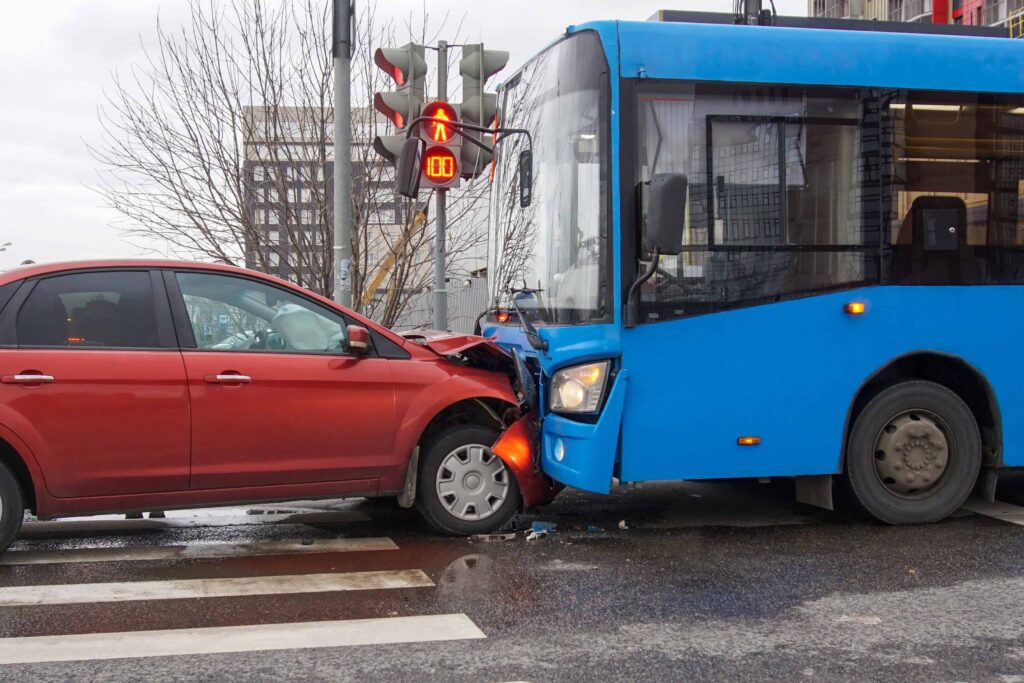
Who Can Be Held Responsible for a Bus Accident?
Several parties could share responsibility, including:
- The Bus Driver: If they were distracted, speeding, fatigued, or violated traffic laws.
- The Bus Company: A private operator (like Greyhound) or a public entity (like MTS) could be liable for negligent hiring, poor driver training, or failure to maintain the bus.
- A Government Entity: If a poorly maintained road, a broken traffic signal, or a dangerous intersection design contributed to the crash, the city or state government may be a party to the claim.
- The Bus Manufacturer: If a mechanical failure, such as faulty brakes or a defective tire, caused the accident.
- Another Driver: If the actions of another vehicle operator caused the bus driver to lose control or crash.
What Is Different About Suing a Government Entity?
If your claim involves a public bus system like MTS, you must follow the strict procedures of the California Tort Claims Act.
You have only six months from the date of the injury to file a formal notice of claim with the correct government agency. If you miss this deadline, you will likely lose your right to pursue compensation. This is a much shorter period than the standard two-year statute of limitations for most personal injury cases in California.
The notice of claim itself has rigid requirements for the information that must be included. A simple error or omission could get your claim rejected on a technicality.
What Kinds of Evidence Are Used in a Bus Accident Case?
Building a strong claim requires more than just a police report. We investigate every angle and gather objective evidence to reconstruct what happened. This includes:
- Event Data Recorder (EDR): Many commercial buses are equipped with an EDR, or "black box," that records data points like speed, braking, and steering inputs in the moments before a crash. This information provides an unbiased account of the bus's operation.
- Video Surveillance: Onboard cameras can show the driver's actions and the conditions inside the bus, while nearby traffic or business cameras might capture the accident from an external perspective.
- Maintenance and Inspection Records: We request and review the bus company's logs to see if the vehicle was properly maintained. A history of recurring mechanical problems or missed inspections can demonstrate negligence.
- Driver's Records: A driver's employment file, training history, and driving record may reveal patterns of unsafe behavior or inadequate training.
What to Expect from the Insurance Company

Whether you are dealing with a private insurer for a charter bus company or the risk management department of a government entity, their role is to manage the organization's financial exposure.
They Are Businesses Managing Financial Risk
This creates an inherent conflict. Their goal is to resolve your claim for an amount they deem fair, which may not align with the true extent of your injuries and losses.
What to Look Out For During the Claims Process
- A Quick Settlement Offer: An insurer might make an offer before the full scope of your injuries is clear. Accepting an early payout may feel like a relief, but you could be forfeiting your right to compensation for future medical care or lost income if your condition worsens.
- Requests for a Recorded Statement: The adjuster may ask you to provide a recorded statement. You are not obligated to do so. They are trained to ask questions that could be used later to argue you shared fault or that your injuries are not as serious as you claim. It is best to let your attorney handle all communications.
- A Methodical and Tedious Process: The claim process is filled with paperwork and requires detailed documentation. It is easy to grow frustrated as medical bills mount. This pressure sometimes leads people to accept a lower offer just to end the process. Our team manages this from start to finish.
Steps You Can Take from Home to Support Your Claim
While our team handles the legal work, there are several things you can do to strengthen your case.
- Follow Your Doctor's Treatment Plan: Attend all medical appointments and physical therapy sessions, and follow through with prescribed treatments. This demonstrates to the insurance company that you are serious about your recovery and creates a clear medical record of your injuries.
- Keep a Pain Journal: Each day, write a few notes about your pain levels, any physical limitations you experience, and how your injuries are affecting your daily life. This can become powerful evidence to document your pain and suffering.
- Track All Expenses: Keep every receipt related to the accident. This includes medical bills, pharmacy co-pays, and even mileage for trips to the doctor's office.
- Avoid Discussing the Accident on Social Media: Insurance companies will look at your social media profiles. A single photo or comment might be taken out of context and used to argue that your injuries are not as severe as you claim. Refrain from posting about the accident or your recovery.
- Direct All Communications to Our Office: If an insurance adjuster calls you, you do not have to speak with them. Simply refer them to our office.
Don’t Let a Demanding Claim Stand in Your Way
You may feel that taking on a large company or a city agency is an impossible task. It is not—it just requires the right team on your side advocating for your interests.
Our team at Harris Personal Injury Lawyers is ready to manage every detail of your claim so you can focus on healing. The first step is to understand your legal options.For a free, confidential discussion about your case, call us at (619) 864-7101.